Mold Inspection & Testing in Metro Atlanta
Worried about mold? We find the moisture behind it, test the air with independent lab analysis, and tell you the truth — in plain English.
Schedule Mold Testing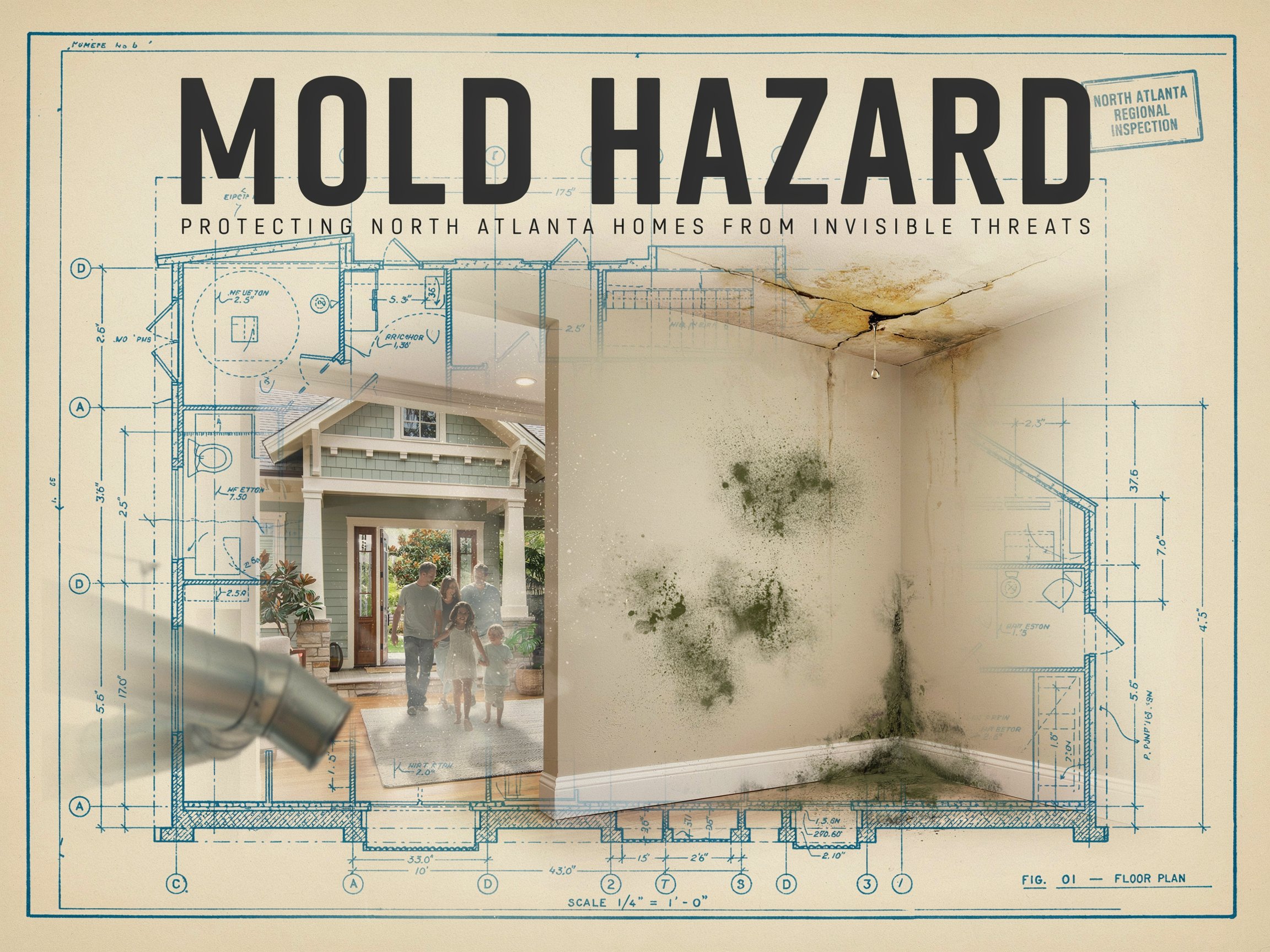
Why Total Home
We Know What
to Look For
Mold is a moisture problem first and a mold problem second. Scrub the surface and ignore the water feeding it, and it comes right back.
Bathroom walls
Behind tile, tubs, and showers.
Under kitchen sinks
Slow leaks in cabinets and traps.
Crawlspaces
Damp, dark, poorly ventilated.
Attics
Roof leaks and trapped humidity.
HVAC systems
Condensation in ducts and coils.
Basements
Foundation seepage and humidity.
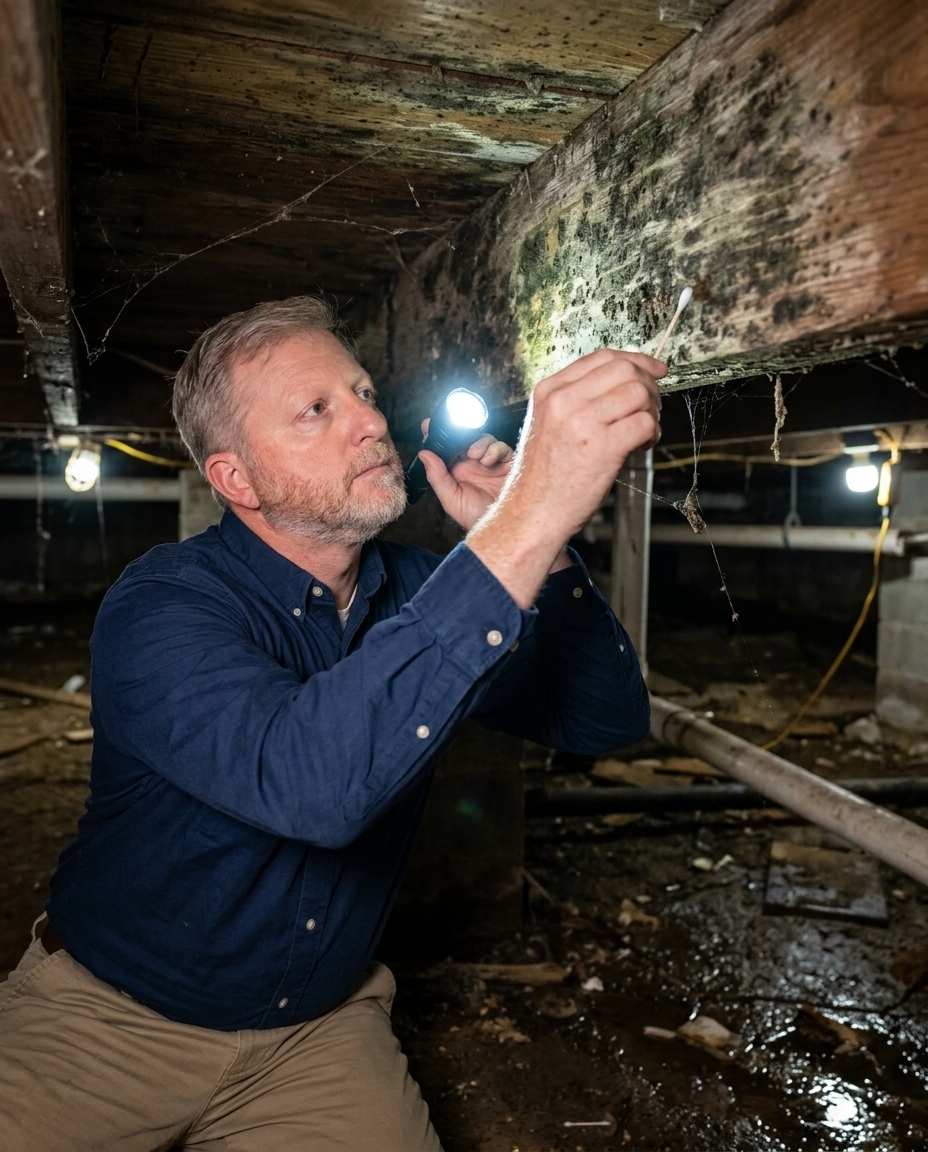
Every inspection follows the IAC2 Mold Inspection Standards of Practice — a non-invasive visual exam, moisture and humidity readings throughout the home, and air and surface samples analyzed by an independent lab. After inspecting metro-Atlanta homes since 2002, we know where the water hides and where mold takes hold.
The Basics
What Is Mold — and Why It Matters
Mold is a fungus that exists almost everywhere. It travels as microscopic airborne spores — harmless in small amounts, impossible to eliminate entirely. The trouble starts when those spores land on a damp surface and begin to grow.
Moisture
A leak, high humidity, poor drainage, or past water damage.
Something to feed on
Drywall, wood, paper, even ordinary household dust.
The right warmth
Ordinary indoor temperatures are ideal — a home provides it easily.
Control the moisture and you control the mold. Why it matters: mold can aggravate allergies and asthma and irritate the respiratory system — especially in children, older adults, and the sensitive — and it feeds on the very materials your house is built from. Testing answers what a look can't: is the level inside elevated compared to outside, and what's the moisture source driving it?
We test — we don't remediate. We have no removal work to sell you, so we have no reason to inflate a problem, or to wave one off. You get the truth, backed by independent lab results.
What's Included
A Complete, Lab-Backed Inspection
Following the IAC2 Mold Inspection Standards of Practice, every inspection pairs a hands-on examination of your home with independent laboratory testing.
What We Examine
How We Test
The home inspection with Total Home Consultants was amazing. We were very blessed to have Chris Wolter as our inspector — a pleasure to work with and extremely detailed. I'll definitely use him for any future inspection.
After the Inspection
What You Walk Away With
On-Site Findings
We walk you through where there's moisture and growth before we leave.
Independent Lab Analysis
Indoor spore levels compared against the outdoor baseline.
A Lab-Backed Report
Whether you have a problem, where, and the source — in 1–2 business days.
Unbiased Next Steps
Because we don't sell remediation, our recommendations are yours to trust.
Common Questions
Mold Testing FAQs
What does a mold inspection include?
A non-invasive visual examination of the areas where mold and moisture hide, moisture and humidity readings throughout the home, and air and surface samples analyzed by an independent lab — all following the IAC2 Mold Inspection Standards of Practice.
What are the signs I might have a mold problem?
A persistent musty smell, visible spots on walls or ceilings, recent or past water damage, condensation, or unexplained allergy and respiratory symptoms that ease when you leave the house. Any one is worth testing — mold often grows where you can't see it.
Is mold in a house dangerous?
It depends on the type and amount. Mold can aggravate allergies and asthma and irritate the respiratory system, especially in children, older adults, and people with sensitivities. The only way to know what you're dealing with is to test and have the samples analyzed by a lab.
Do at-home mold test kits work?
Not reliably. Store-bought kits almost always find mold — because mold is everywhere — without telling you whether your levels are elevated or where the moisture is coming from. Professional testing compares indoor levels to an outdoor baseline and uses accredited lab analysis to give you an answer you can act on.
Do you also remove or remediate the mold?
No — and that's on purpose. We test; we don't remediate. That keeps our findings independent: we have nothing to gain by over-reporting a problem or downplaying one. If remediation is needed, we'll tell you what to look for in a contractor.
How much does mold testing cost?
It depends on the size of the home and how many samples are needed. What you're paying for is an independent, lab-backed answer to a question that affects your health and your largest investment — far cheaper than remediating a problem you guessed at wrong.
Should I test for mold before buying a house?
If there's any history of water damage, a musty smell, or visible staining, yes. Finding a moisture or mold problem before closing gives you leverage to negotiate repairs or walk away — afterward, it becomes your problem to fix.