Radon Testing in Metro Atlanta
Radon is invisible, odorless, and the leading cause of lung cancer in non-smokers. The only way to know your home's level is to test it — with professional, continuous monitoring you can trust.
Schedule Radon Testing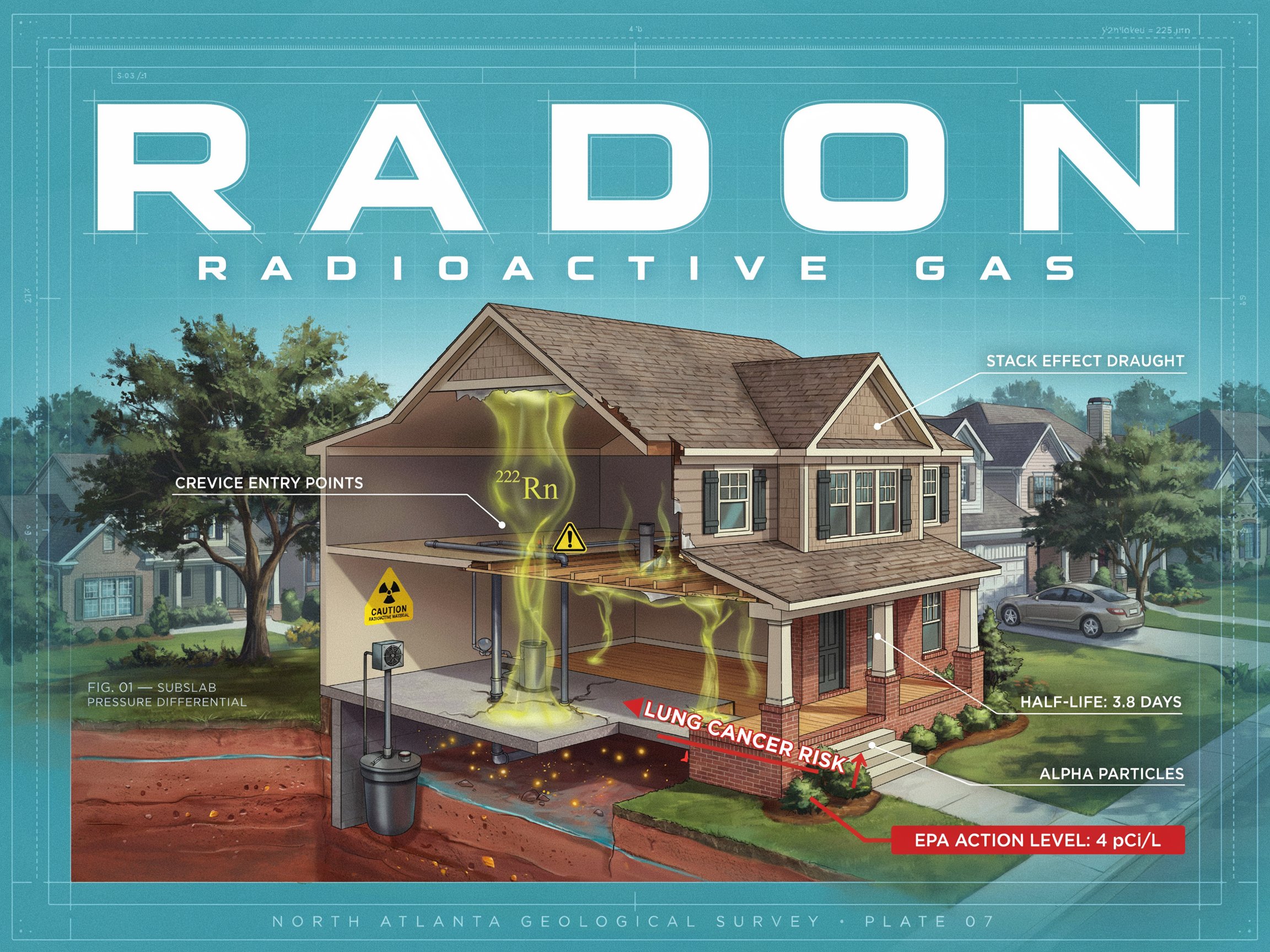
Why Total Home
You Can't See It.
You Can Measure It.
Radon seeps up from the ground into homes of every age and style. Two houses next door to each other can test completely differently — which is why yours has to be tested on its own.
Foundation cracks
Gaps in slabs and basement walls.
Construction joints
Where floors and walls meet.
Gaps around pipes
Service line and utility penetrations.
Sump pits & drains
Open paths straight to the soil.
Crawlspaces
Exposed earth under the home.
Well water
Can release radon indoors.
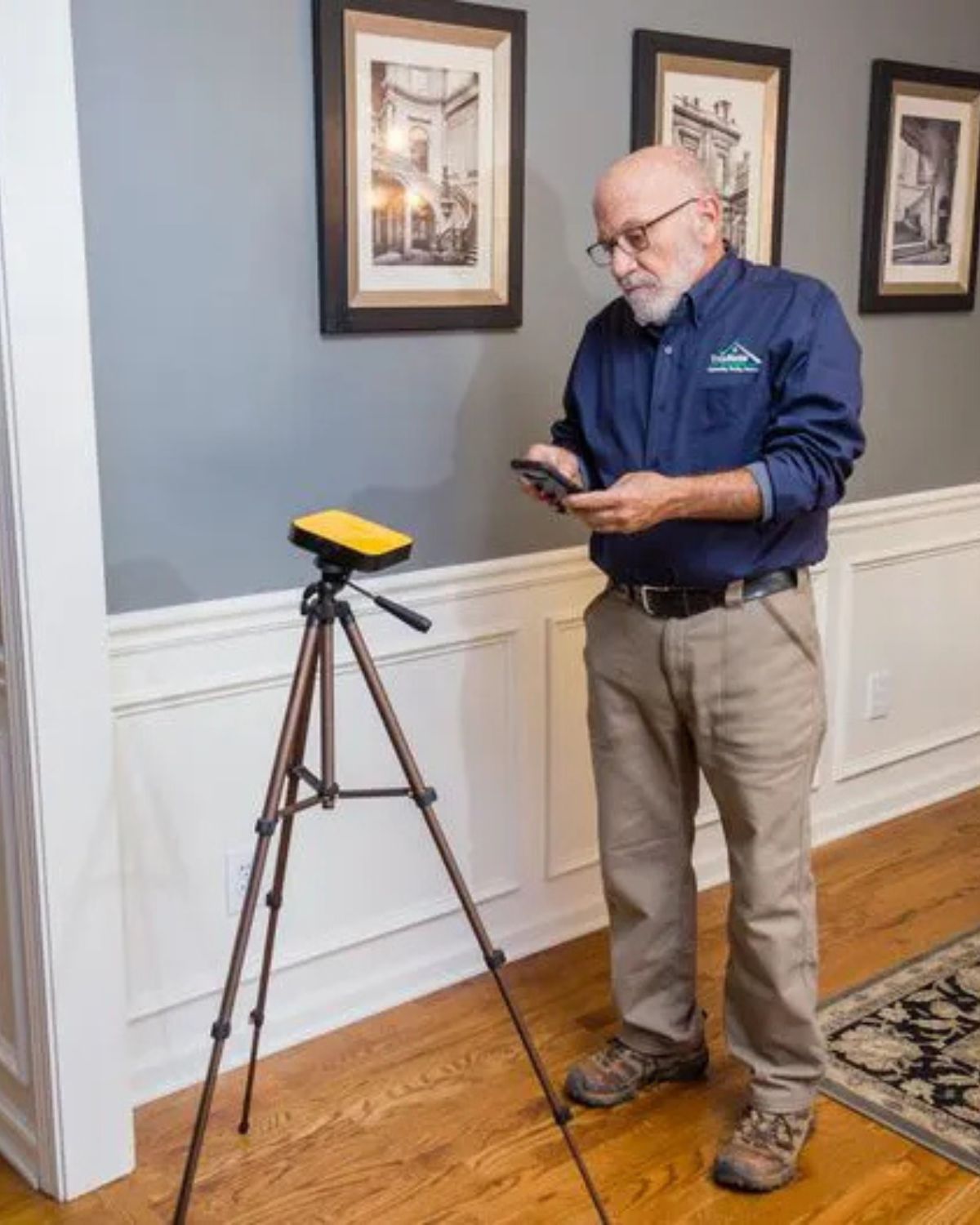
Our testing follows the IAC2 Radon Standards of Practice using a professional continuous radon monitor — not a mail-in kit. After testing metro-Atlanta homes since 2002, we know how to place the monitor and run the test so the number you get is the number you can trust.
The Basics
What Is Radon — and Why It Matters
Radon is a naturally occurring radioactive gas formed as uranium in soil and rock breaks down. It rises out of the ground everywhere — outdoors it disperses harmlessly, but indoors it can build up to levels that are dangerous over time.
Invisible
No color, no smell, no taste — you'd never know it's there.
From the ground up
It seeps from the soil into any home — new or old, slab or basement.
Only testing finds it
The single way to know your level is to measure it directly.
Why it matters: the EPA identifies radon as the leading cause of lung cancer among non-smokers and the second leading cause overall — the risk comes from breathing elevated levels year after year. The good news: a radon problem is fixable once you know it exists. Testing is how you find out.
We test — we don't sell mitigation. Our only job is to hand you an accurate number and explain what it means. No upsell, no pressure — just the truth about the air in your home.
What's Included
A Test You Can Actually Trust
Following the IAC2 Radon Standards of Practice, we use a professional continuous monitor and a controlled protocol — a world apart from a hardware-store kit.
How We Test
Why It Beats a Kit
Chris was very detailed and explained every issue as he went through the house. I'm thankful a radon test was offered — we found significant concerns. The team was professional from service request to completion. I highly recommend.
After the Test
What You Walk Away With
On-Site Reading
We read the monitor and explain your result before we leave.
Your Level in pCi/L
Your home's average, measured against the EPA's 4.0 action level.
A Clear Report
What your number means — delivered the same day the test is read.
Unbiased Next Steps
If a fix is warranted, honest guidance — because we don't sell mitigation.
Common Questions
Radon Testing FAQs
What is radon and why should I test for it?
Radon is a naturally occurring radioactive gas that seeps from soil into homes. You can't see, smell, or taste it, and the EPA identifies it as the leading cause of lung cancer among non-smokers. The only way to know whether your home has elevated levels is to test — and if it does, the problem can be fixed.
How does the test work and how long does it take?
We place a professional continuous radon monitor on the lowest livable level of your home and run the test for a minimum of 48 hours under closed-house conditions. The monitor records hour-by-hour readings, and we read your result on site the day the test ends — no mail-in lab wait.
What radon level is considered a problem?
The EPA recommends fixing your home if the level is 4.0 pCi/L or higher, and considering a fix between 2.0 and 3.9 pCi/L. No level of radon is completely risk-free, so the goal is to get it as low as reasonably possible. We'll walk you through exactly where your number falls.
Are at-home radon kits accurate?
They can work, but they're easy to get wrong — placement, closed-house conditions, and mailing delays all affect the result, and you get a single average rather than hour-by-hour data. A professional continuous monitor, placed correctly and run to protocol, gives you a far more reliable answer and a result the same day.
Do you also fix or mitigate radon?
No — and that's deliberate. We test; we don't sell mitigation. That keeps our results completely independent: we have no reason to push a number one way or the other. If a fix is warranted, we'll tell you what to look for in a qualified mitigation contractor.
Should I test for radon when buying a home?
Yes. Radon is one of the easiest things to address before closing — an elevated result gives you room to negotiate a mitigation system or a credit. Many buyers add radon testing to their home inspection so they have the full picture before they commit.
Is radon really a problem in Georgia?
Yes. Homes across the north Georgia Piedmont — including the metro-Atlanta counties we serve — regularly test at or above the EPA's action level, and several local counties fall in the EPA's higher-potential zones. Because levels vary house to house, the only way to know about yours is to test it directly.